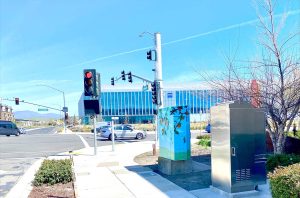
Cities should start with the intersections where a power outage would cause the biggest problems. That includes places where public safety is at risk, emergency vehicles need reliable access, or traffic disruptions would spread quickly through the surrounding road network.
Imagine a power outage hitting several busy roads at the same time late in the day. One intersection may lead to a hospital, another may serve school traffic and buses, and another may support connected equipment that sends data to the traffic management center.
On a map, they may all look like regular intersections. But during a blackout, they are not all equal. Some intersections may be managed temporarily with traffic control. Others can become safety or emergency response concerns within minutes. That is why cities need a clear way to decide which intersections should receive backup power first.
The goal is not to protect every location simultaneously. It is to prioritize the sites where an outage would have the greatest impact on safety, traffic flow, and emergency response. For agencies considering HyMax hydrogen backup systems, the better question is not “Which intersection is busiest?” but “Which outage would hurt the most?”
Why should outage impact matter more than traffic volume?
Because the most important intersection is not always the busiest one, it is the one that creates the biggest problem when it goes dark.
A high-traffic location may still matter less than a smaller intersection that serves a fire station, hospital route, evacuation corridor, water treatment access point, or railroad crossing. Some locations are tied into ITS systems that help control nearby signals. When those sites lose power, the problem can affect multiple intersections. That is why a robust backup power plan should not be based solely on traffic volume. It should also look at how important each site is to the wider traffic network.
It should also consider emergency access, transit routes, school-zone complexity, freight movement, and whether the site supports communications that help manage the larger traffic network.
How should cities measure reliability needs at each intersection?
They should start by identifying what must stay powered and for how long. Reliability depends on the actual electrical load, the required runtime, and the likelihood of long or repeated outages at the site.
This is where the review becomes more technical. Each intersection should have a load table that includes the signal controller, conflict monitor, detection systems, communications equipment, signal indications, and any other devices that cannot go offline. The city also needs to decide how long each site must stay running during an outage. A corridor that faces hurricanes, wildfire-related power outages, or frequent power failures may need backup power for much longer than a lower-risk location.
The goal is to rank intersections based on real backup power needs, not guesses. Backup power only helps if it can last through the outage that the site is most likely to face.
Why does safety involve more than keeping the lights on?
An intersection is not safe just because the signal heads are illuminated. The control systems inside the cabinet must remain active so the intersection continues to operate in a stable, predictable way.
This includes the controller, conflict monitor, communications links, and any monitoring or telemetry needed to manage the site. If those systems go down, the intersection may appear to be operating, but the control system behind it may not be stable.
A good prioritization plan should also look at safety factors, such as:
- Pedestrian activity
- Crash history
- Complex turns
- Unusual intersection angles
- Poor visibility
- Nearby schools or senior facilities
These factors can make an outage more dangerous. In these situations, backup power is not just about keeping the lights on. It is about helping the intersection operate safely.
How should sustainability affect which sites go first?
Sustainability should matter most where clean backup power solves a real operational problem. A hydrogen cell should move up the list when it improves resilience and reduces the drawbacks of combustion-based backup.
That can make a real difference at intersections near homes, schools, hospitals, and dense urban corridors where generator noise and local emissions can create added concerns. A PEM fuel cell provides clean backup power by generating electricity through a chemical process rather than burning fuel. But clean power should not be the only reason a site gets priority. The main goal is still reliable, long-lasting backup power. In other words, sustainability matters most when it also helps keep a critical site protected during a serious outage.
What site conditions should change an intersection’s priority?
Site conditions should absolutely affect the order. A high-priority intersection may need to move down the list if it is difficult to deploy safely. In contrast, a moderate-priority site may move up if installation is straightforward and the resilience value is strong.
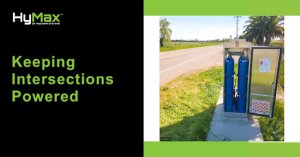
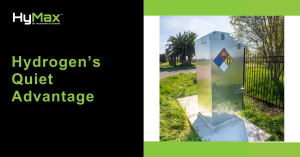
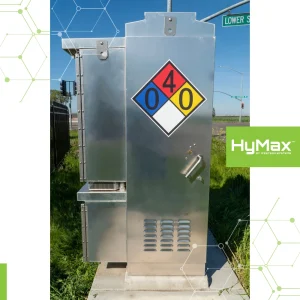
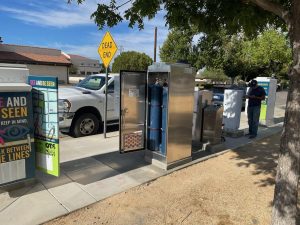
This is where engineering reality matters. Cities should also consider whether the site can realistically support the backup power system. That means looking at cabinet space, service access, hydrogen storage, weather exposure, and overall safety. If the site has tight clearances, poor ventilation, difficult maintenance access, or an awkward layout, installation may take longer, and long-term support may be more difficult.
On the other hand, a site with enough space, manageable logistics, and a high resilience payoff may be a strong early candidate. A prioritization plan only works if it reflects actual field conditions.
Why does proven field experience matter when setting priorities?
Because cities usually want the lowest-risk option at the sites that matter most. Proven experience helps reduce uncertainty when deploying backup power at critical intersections.
That is where trust and proven expertise become part of the decision. If a system has already been successfully used in roadside environments, cities can develop rollout plans with greater confidence. For agencies considering HyMax hydrogen backup systems, it makes sense to start with the intersections where an outage would cause the biggest problems. That usually means sites with the highest safety risks, the longest runtime needs, the greatest impact on traffic or emergency response, and the fewest barriers to installation. From there, cities can build a phased backup power plan that is practical and easy to justify.
If your team is deciding which intersections to protect first, HyMax can help review runtime needs, cabinet space, hydrogen storage, and overall backup power readiness for traffic systems and connected equipment.
FAQs
How often should cities review their backup power priorities?
Cities should review priorities whenever traffic patterns, emergency routes, school zones, development plans, or outage risks change. An intersection that was of lower priority a few years ago may become more important if new housing, a hospital expansion, transit changes, or connected ITS equipment affects the area.
Should cities protect one corridor at a time or individual intersections first?
It depends on how the traffic network is set up. Sometimes, it makes sense to protect an entire corridor because multiple intersections work together to keep traffic, emergency vehicles, or evacuation routes moving. Other times, it may be better to start with one key intersection because losing power there would create the biggest safety or traffic problem.
Can backup power priorities help support funding requests?
A clear prioritization plan can strengthen funding requests by showing why certain intersections need protection first. Agencies can connect each site to safety, emergency access, outage history, traffic operations, resilience goals, and deployment readiness.
What data should cities gather before ranking intersections?
Cities should gather outage history, cabinet load information, details of connected equipment, crash history, pedestrian activity, emergency route data, proximity to schools or senior facilities, cabinet space, and installation constraints. This helps make the ranking based on real risk and site conditions rather than assumptions.